 technical skill
Building a Multi-Touch Outbound Sales Cadence That Converts
Apollo
YouTube creator
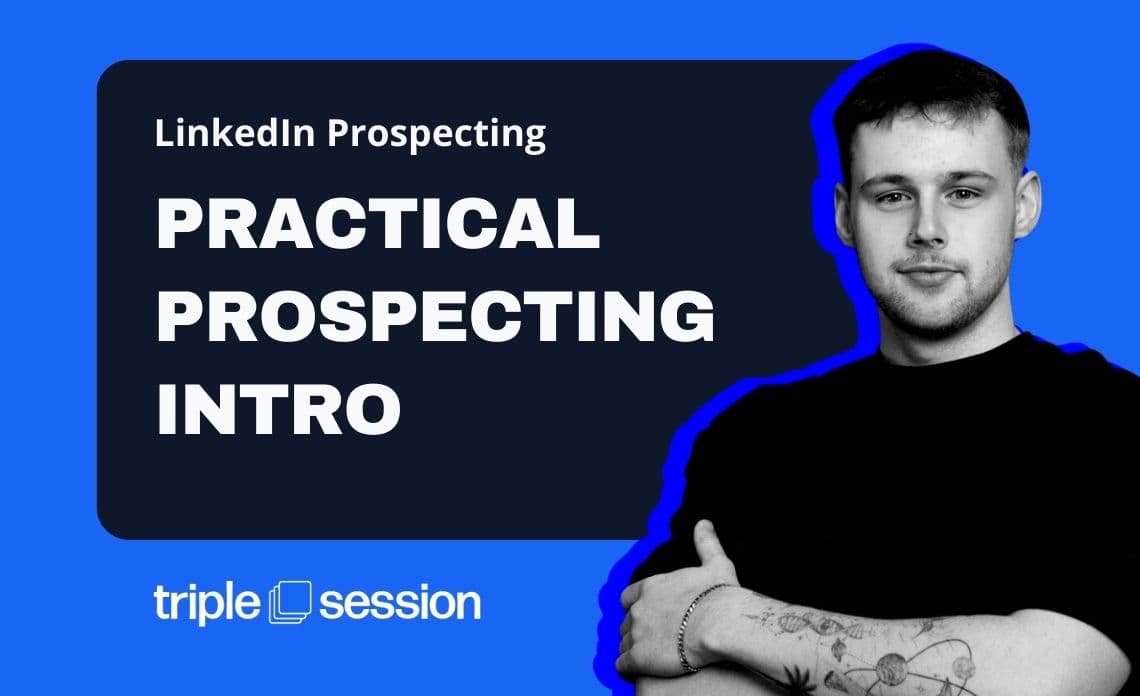
Jed Mahrle
Head of Outbound Sales at Milkshake
LinkedIn is often seen as a social networking platform, but in reality, it is one of the most powerful and underutilized tools for prospecting and generating leads. In this Triple Session course on advanced LinkedIn prospecting, Jed will share his insights and experiences using LinkedIn as a primary tool for setting outbound meetings.
Jed Mahrle has helped build two successful outbound sales teams from scratch and consulted with numerous startups on developing and implementing effective outbound sales strategies. He is also the creator of the Practical Prospecting newsletter, which has over 17,000 subscribers and provides practical examples on how to set meetings on a weekly basis. Over the past five years, LinkedIn has been the main tool he has used to set outbound meetings, and he is excited to share my learnings and insights in this course.
Before we delve into the details of LinkedIn prospecting, Jed will introduce you to the practical prospecting method, which is the foundation of my approach. Outbound sales is often seen as complicated, requiring fancy technology and tactics. However, in reality, it comes down to three core components: targeting, messaging, and offering. By focusing on who you are targeting, what your message is, and what you are offering, you can simplify and streamline your outbound sales efforts. The practical prospecting method is based on the 80-20 rule, where 20 percent of your activities lead to 80 percent of your results. By honing in on these three key components, you can optimize your prospecting efforts and achieve better outcomes.
LinkedIn is the best data platform on the market when it comes to gathering accurate and up-to-date information about professionals and companies. With over 900 million users, LinkedIn offers a wealth of data that can't be found anywhere else. People constantly update their profiles with job changes, posts, and other valuable information, making it the cleanest and most current platform available. Moreover, LinkedIn provides unique insights into users' job descriptions, company information, and industry trends, enabling you to tailor your messaging and offerings to specific prospects.
Another powerful aspect of LinkedIn is its ability to serve as your personal landing page for setting inbound meetings on autopilot. Though it requires time and effort to achieve, Jed will share the exact steps and real examples from my own career on how to leverage LinkedIn to generate inbound leads effortlessly.
In this course, we will cover various aspects of advanced LinkedIn prospecting to help you maximize your results:
Outbound sales is facing significant challenges in the current business landscape. As more teams turn to outbound strategies due to the decline in inbound leads, the volume of email and call activities has skyrocketed. Consequently, it has become increasingly difficult to reach prospects, with connect rates declining and the number of touchpoints required to reach a prospect increasing.
Moreover, the effectiveness of email outreach has diminished due to the sheer volume of emails being sent. Deliverability, open rates, and reply rates have all decreased, making it even harder to break through the noise and earn a response from prospects. Similarly, LinkedIn message volume has surged, leading to decreased responsiveness and engagement from buyers. In this challenging environment, it is crucial to adapt and find a different approach to stand out and succeed.
To overcome the challenges of outbound sales, the solution lies in narrowing your focus to the ideal customer profile (ICP) and targeting the 1 percent of accounts that are most likely to buy from you. While many companies focus on their total addressable market (TAM) and their ICP, they often neglect the opportunity to hyper-focus on the accounts with the highest potential to convert. By honing in on these high-value accounts, you can increase your chances of success and achieve better results across all stages of the sales process.
To create a hyper-specific ICP, Jed recommends analyzing your inbound data and identifying patterns among the accounts and contacts that have converted into leads and deals. By examining attributes such as company type, industry, size, location, and technology usage, you can gain valuable insights into the characteristics of your most promising prospects. Look for signals and patterns that indicate readiness to buy, such as recent growth, hiring activity, funding, or promotions within the organization. By understanding the factors that lead to inbound leads, you can proactively target similar accounts and increase your conversion rates.
In this introductory session, we have laid the groundwork for advanced LinkedIn prospecting. By understanding the practical prospecting method, the power of LinkedIn as a prospecting tool, and the importance of narrowing your ICP, you are on the path to unlocking the full potential of LinkedIn for outbound sales. In the next session, we will dive deeper into LinkedIn targeting techniques to help you find the warmest leads in your market. Stay tuned for more practical insights and actionable strategies to enhance your prospecting efforts using LinkedIn.
Free plan, no credit card. Watching opens this session in the Triple Session app.
technical skillApollo
YouTube creator
 technical skill
Sell Better
YouTube creator
 technical skill
Wiza
YouTube creator
How Triple Session works
Coaching fails when it is an event. Triple Session turns it into a loop: measure the gap, train against it, and check whether the next call moved.
01
Every call is recorded and scored against your own playbook, so the distance between what your team says and what the playbook asks for stops being a guess.
02
Patterns roll up across reps, deals, and objections. You see which behavior is costing pipeline, not just which rep is behind.
03
Training is assigned against that specific gap: short, expert-led sessions tied to the behavior you just measured.
04
Managers coach from evidence instead of memory. A scorecard, the moment in the transcript, and the one thing to practice next.
Start with the free plan and run the loop on your own playbook. No credit card, no procurement conversation.