 technical skill
Building AI Workflows with Claude Cowork Skills
Brock Mesarich | AI for Non Techies
YouTube creator
Matt Doyon
Chief Executive Officer @ Triple Session
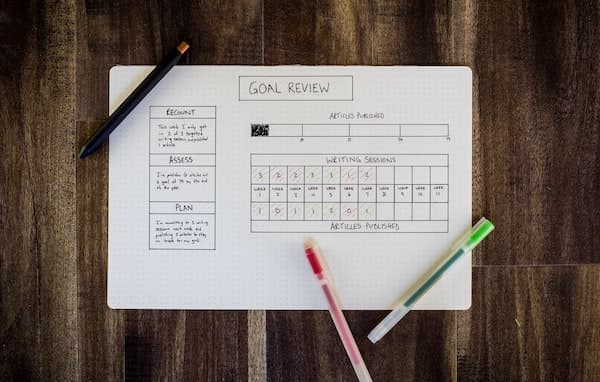
Do you ever find yourself wondering how to enhance your sales strategies and achieve more with your clients? In a world where goal setting is paramount, statistics reveal that businesses that actively engage in structured goal-building processes are 42% more likely to achieve success. But what is the secret sauce behind these achievements? The answer lies in the power of SMART Goals.
In this insightful session, our expert delves into the world of SMART Goals, one of the most widely embraced methodologies for goal building. But what exactly are SMART Goals, and how can sales reps leverage this approach to enhance their success rates?
The first step in this journey is comprehending the essence of business goals. Business goals are the measurable outcomes that companies, teams, or individuals actively strive to achieve over a specific period. The key is understanding your audience, a critical element when engaging in goal-building exercises.
Now, let's explore the seven key benefits that SMART Goals bring to the table, especially when collaborating with clients:
1. Credibility BoostTo grasp the full potential of SMART Goals, let's walk through an example. Imagine a sales goal centered around revenue:
"I want to achieve 20 new clients at $100,000 each by the end of this year, resulting in a 33% year-over-year increase in total revenue. This will enable us to allocate more funds to marketing and sustain continuous business growth."
Let's break down this goal using the SMART criteria:
As a sales rep, embracing SMART Goals is not just a strategic move; it's a game-changer. By incorporating these principles into your interactions with clients, you position yourself as a credible, collaborative, and results-oriented professional. To delve deeper into the nuances of SMART Goals and witness their transformative power, watch the session mentioned above. Remember, practice makes progress, and with SMART Goals, your journey to sales excellence has just begun.
Free plan, no credit card. Watching opens this session in the Triple Session app.
technical skillBrock Mesarich | AI for Non Techies
YouTube creator
 technical skill
Eric Nowoslawski
YouTube creator
 technical skill
Oleg Melnikov
YouTube creator
How Triple Session works
Coaching fails when it is an event. Triple Session turns it into a loop: measure the gap, train against it, and check whether the next call moved.
01
Every call is recorded and scored against your own playbook, so the distance between what your team says and what the playbook asks for stops being a guess.
02
Patterns roll up across reps, deals, and objections. You see which behavior is costing pipeline, not just which rep is behind.
03
Training is assigned against that specific gap: short, expert-led sessions tied to the behavior you just measured.
04
Managers coach from evidence instead of memory. A scorecard, the moment in the transcript, and the one thing to practice next.
Start with the free plan and run the loop on your own playbook. No credit card, no procurement conversation.