 technical skill
Building AI Workflows with Claude Cowork Skills
Brock Mesarich | AI for Non Techies
YouTube creator
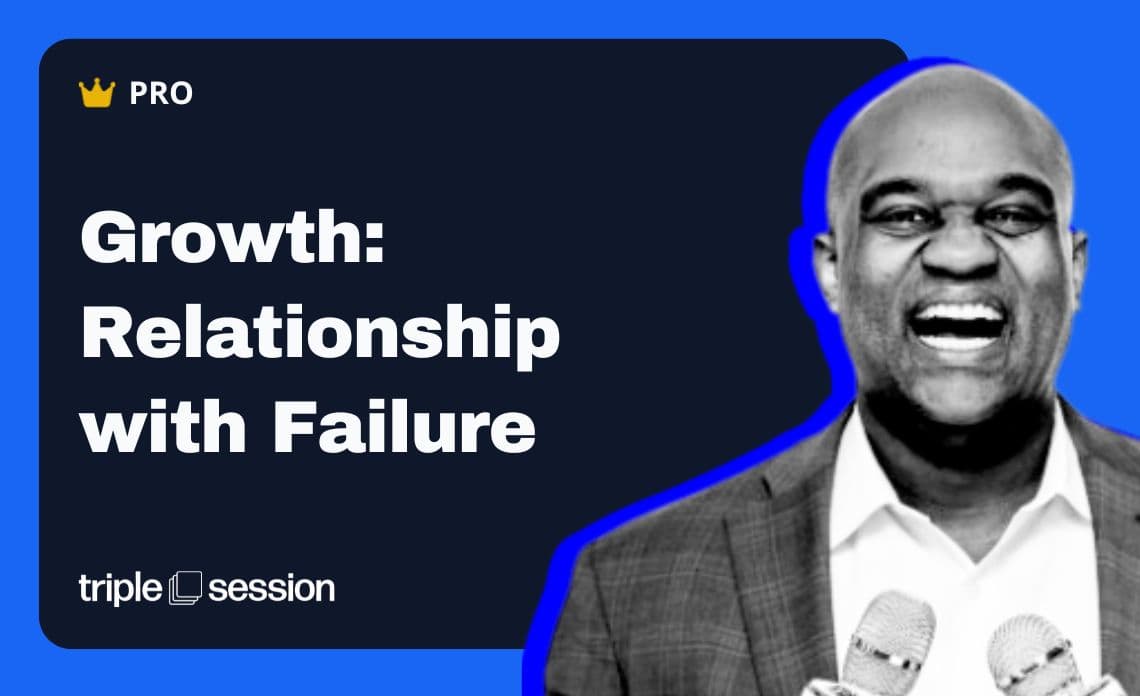
Larry Long Jr.
Chief Energy Officer (CEO), National Speaker, Sales Coach
Failure is often seen as something to avoid, but what if failure is actually the pathway to success? In this session by Larry Long Jr., we’ll explore how to transform failure into a learning opportunity that drives growth.
Many of the world’s most successful people have faced failure:
Sales is a game of persistence. Every rejection, lost deal, or missed opportunity is a chance to learn. Failure isn’t final—it’s feedback. When you embrace this mindset, you’ll bounce back stronger.
When you strike out in sales (or in life), follow this four-step method to turn failure into success.
Take full responsibility. No excuses, no blaming others. If a deal falls through, admit what happened so you can move forward.
Ask yourself:
Turn the lesson into an action plan. If a deal was lost due to poor preparation, commit to better research before your next pitch.
Don’t dwell on failure. Apply what you’ve learned and move forward with confidence. The best sales reps aren’t those who never fail, but those who never give up.
Dr. Willie Jolly says: “A setback is a setup for a comeback.” This means that every rejection or challenge is actually preparing you for a bigger win.
If you lost a deal, it’s not the end—it’s a stepping stone toward a future success. Learn, adapt, and keep pushing forward.
It’s not just about learning from mistakes—you can learn from successes too. At the end of each day, spend 5 minutes journaling:
This simple habit in your evening routine can accelerate your sales growth and keep you improving every day.
Take a moment to reflect:
Now, reframe it—instead of seeing it as a failure, view it as a learning moment that makes you stronger.
Success isn’t about never failing. It’s about learning, growing, adjusting, and trying again. Every experience—good or bad—shapes you into a better salesperson and a stronger professional.
Embrace failure as part of the journey.
Learn from every experience.
Keep pushing forward.
What’s one lesson you’ve learned from a past failure? Share your insights and start applying the 4 A’s today.
Free plan, no credit card. Watching opens this session in the Triple Session app.
technical skillBrock Mesarich | AI for Non Techies
YouTube creator
 technical skill
Eric Nowoslawski
YouTube creator
 technical skill
Oleg Melnikov
YouTube creator
How Triple Session works
Coaching fails when it is an event. Triple Session turns it into a loop: measure the gap, train against it, and check whether the next call moved.
01
Every call is recorded and scored against your own playbook, so the distance between what your team says and what the playbook asks for stops being a guess.
02
Patterns roll up across reps, deals, and objections. You see which behavior is costing pipeline, not just which rep is behind.
03
Training is assigned against that specific gap: short, expert-led sessions tied to the behavior you just measured.
04
Managers coach from evidence instead of memory. A scorecard, the moment in the transcript, and the one thing to practice next.
Start with the free plan and run the loop on your own playbook. No credit card, no procurement conversation.