 technical skill
Building AI Workflows with Claude Cowork Skills
Brock Mesarich | AI for Non Techies
YouTube creator
Larry Long Jr.
Chief Energy Officer (CEO), National Speaker, Sales Coach
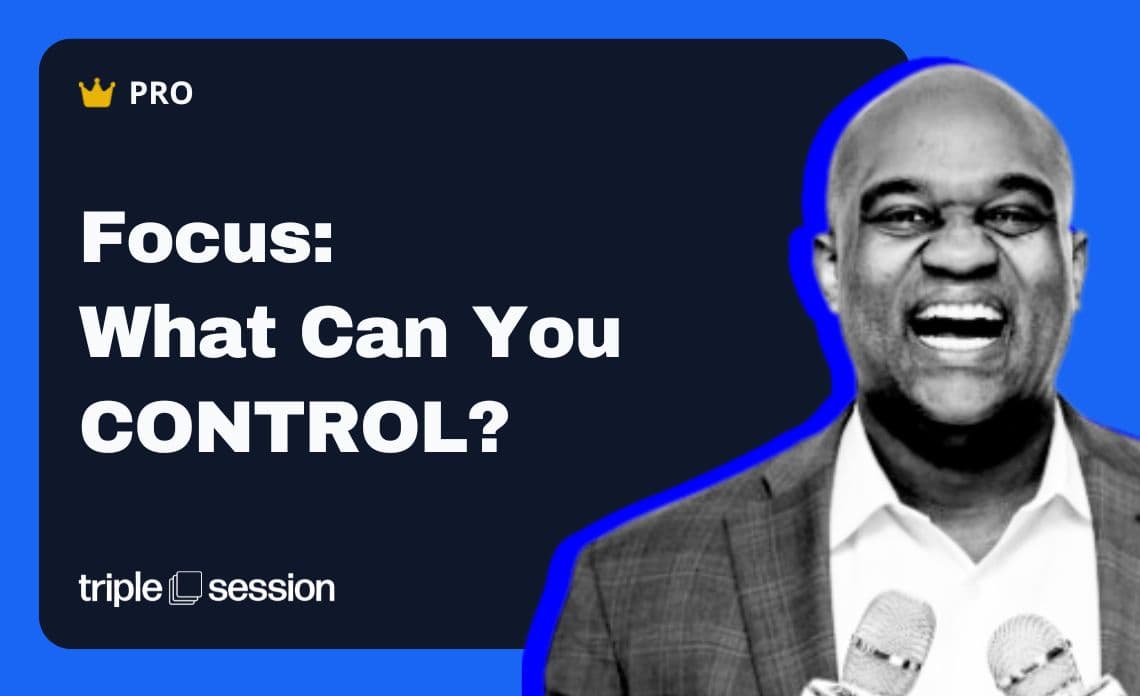
Sales professionals often feel overwhelmed by external factors—market conditions, buyer decisions, or even what others think of them. The key to long-term success? Focusing on what you can control.
This session explores sales controllables, letting go of distractions, and creating a control game plan to help you take charge of your sales success.
In both sales and life, not everything deserves your energy. Stress and frustration often stem from focusing on uncontrollable factors. Instead, shifting your focus to controllables leads to greater confidence, clarity, and results.
Your sales success depends on the actions you take daily. Here are key factors within your control:
Some factors are beyond your control. Trying to change them is a waste of energy.
Recognizing the difference between controllables and uncontrollables allows you to focus on high-impact activities.
When frustration sets in, avoid reacting immediately. Instead, follow these three steps:
Take a moment to stop and reset before responding.
Ask yourself: “Is this within my control?”
This approach ensures your energy is directed toward productive actions rather than distractions.
A strong control game plan helps sales professionals create momentum and drive results.
Write down the three most important things you can control in your sales process. Examples include:
The session introduces Lagniappe, a French Creole term meaning "a little extra."
Applying this in sales could mean:
Small, thoughtful gestures can differentiate you and build stronger connections.
Sales professionals who focus on controllables reclaim their energy, confidence, and results.
Success in sales isn't about controlling everything—it’s about focusing on what truly matters.
Free plan, no credit card. Watching opens this session in the Triple Session app.
technical skillBrock Mesarich | AI for Non Techies
YouTube creator
 technical skill
Eric Nowoslawski
YouTube creator
 technical skill
Oleg Melnikov
YouTube creator
How Triple Session works
Coaching fails when it is an event. Triple Session turns it into a loop: measure the gap, train against it, and check whether the next call moved.
01
Every call is recorded and scored against your own playbook, so the distance between what your team says and what the playbook asks for stops being a guess.
02
Patterns roll up across reps, deals, and objections. You see which behavior is costing pipeline, not just which rep is behind.
03
Training is assigned against that specific gap: short, expert-led sessions tied to the behavior you just measured.
04
Managers coach from evidence instead of memory. A scorecard, the moment in the transcript, and the one thing to practice next.
Start with the free plan and run the loop on your own playbook. No credit card, no procurement conversation.